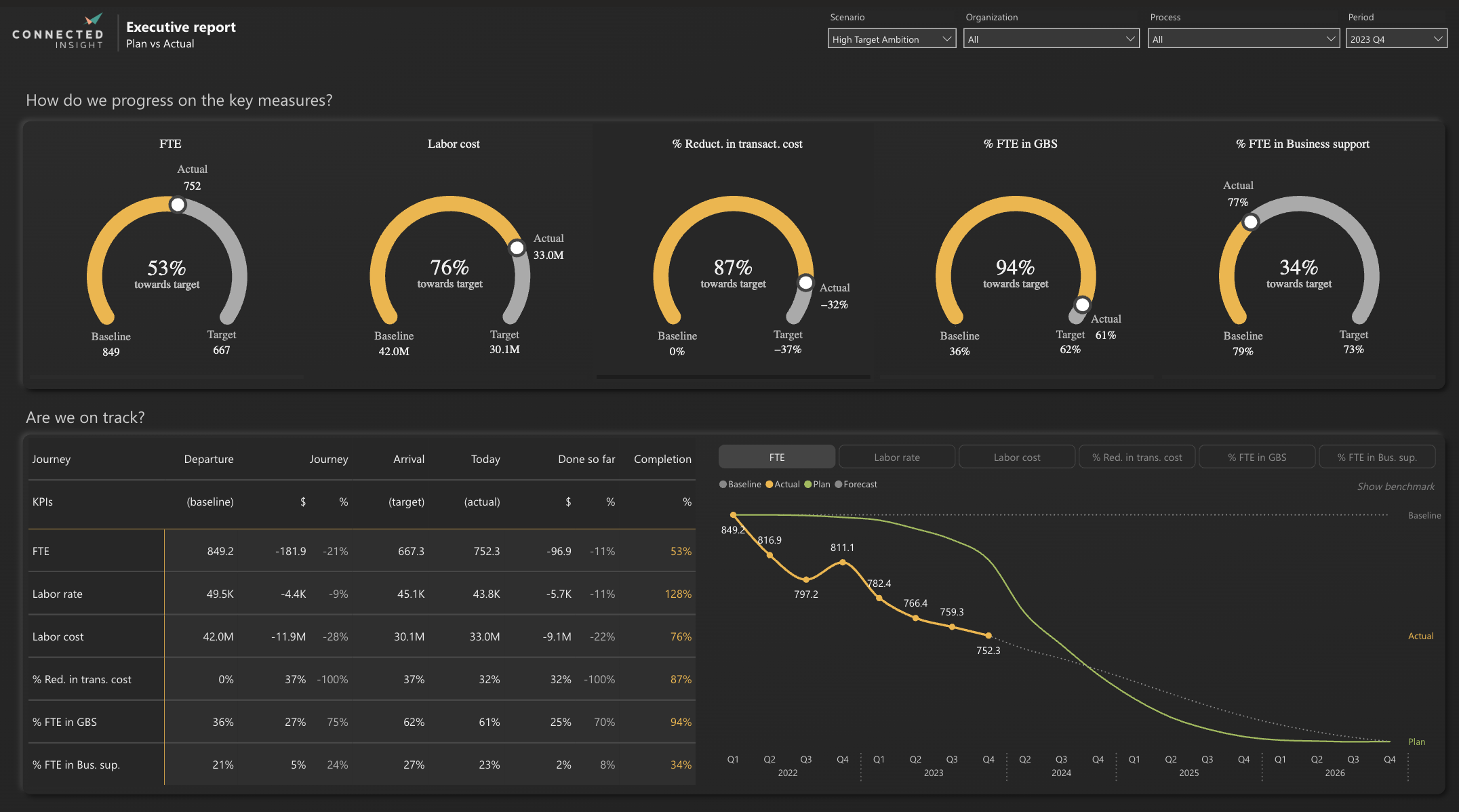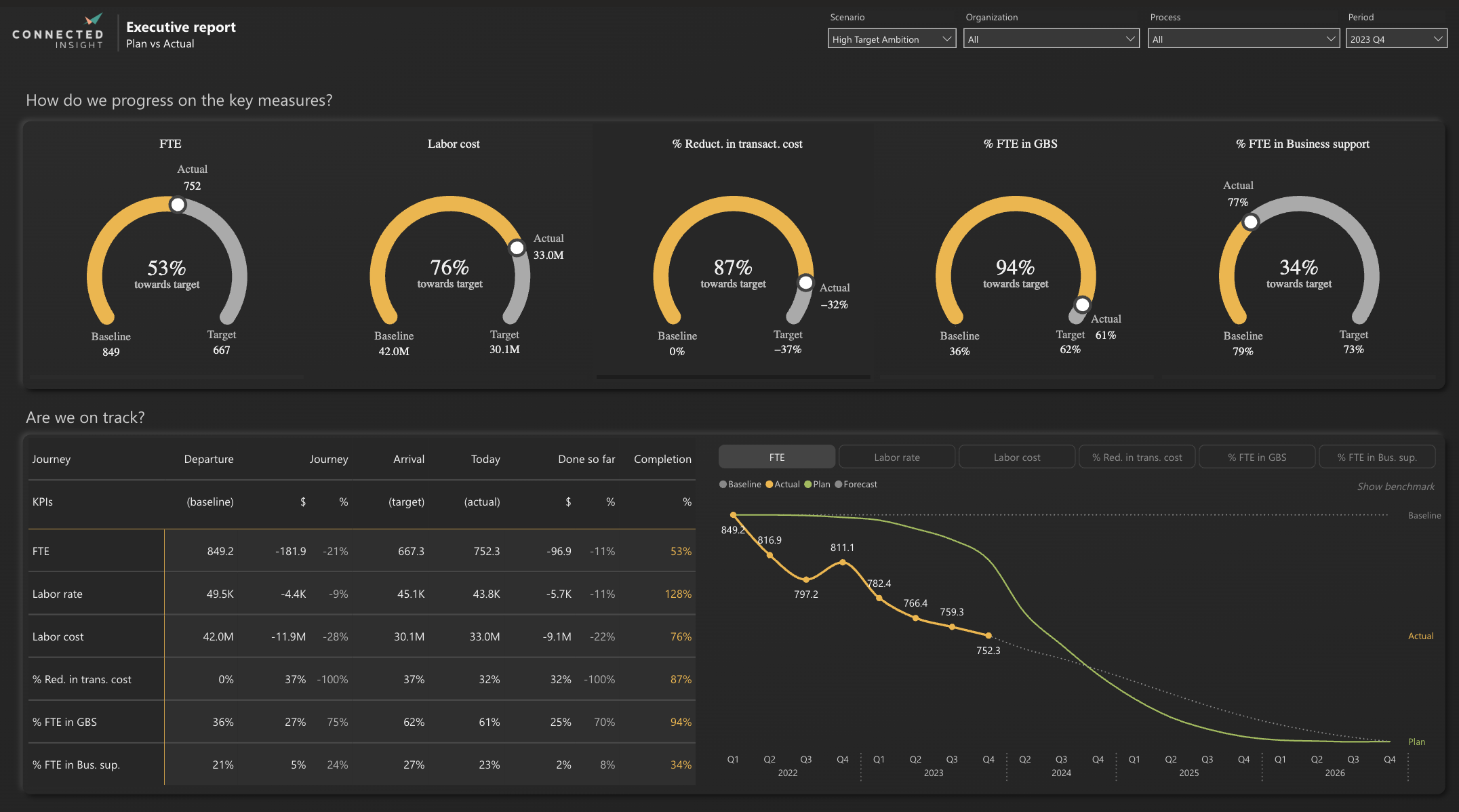
For 15 years at EY I helped clients set transformation targets. Then Johnson Controls asked me to come inside and actually hit the ones I'd set.
They moved my family to Hong Kong, and I spent the next five years leading execution of the same program I had designed as a consultant. That included standing up a 300-seat shared services operation in China.
It took me about a month on the client side to see it. When the consulting team rolls off, the lights go out. The targets are in the final ppt. The data, the analytics, and any way to track who is delivering and who isn't go out the door with the consultants.
So when we started designing Connected Insight, execution was part of the platform from the first sketch. It wasn't a phase two.
I was back on this topic last week in a conversation Boardy set up for me with Nathan Bell at VAI Consulting. It was booked for 30 minutes and ran 46. Nathan spent years at Gartner talking with CFOs, and he described the same pattern every time.
Tell a CFO they're overspending against peers or their headcount is too high, and the very next question is "ok... how do I actually do that?"
That question is louder right now than I've ever heard it. CFOs are being told AI can take out half their finance workforce within 3 years. Fine. Which half, doing what work?
On a recent project, a finance leader was certain his global team was all FP&A. When people told us what they actually spend their time on, roughly half of it was going to tax, reporting, even accounts payable. He was not thrilled. But that's the starting point you need before anyone can model a 50% target, never mind deliver it.
A target nobody can track after the consultants leave is just another slide.
If you've been on the client side of one of these programs, how long did it take before the lights went out?